THE COGNITIVE ARTS RESISTANCE

Why the "Messy" Artifact is More Valuable Than AI Perfection
Explore the intersection of industrial automation and fine art. Gary McCaslin, founder of the Cognitive Arts Resistance, explains why "messy" field studies contain higher-density human data than AI-generated perfection. Discover the philosophy of the Artifact and the future of the Human Edge.
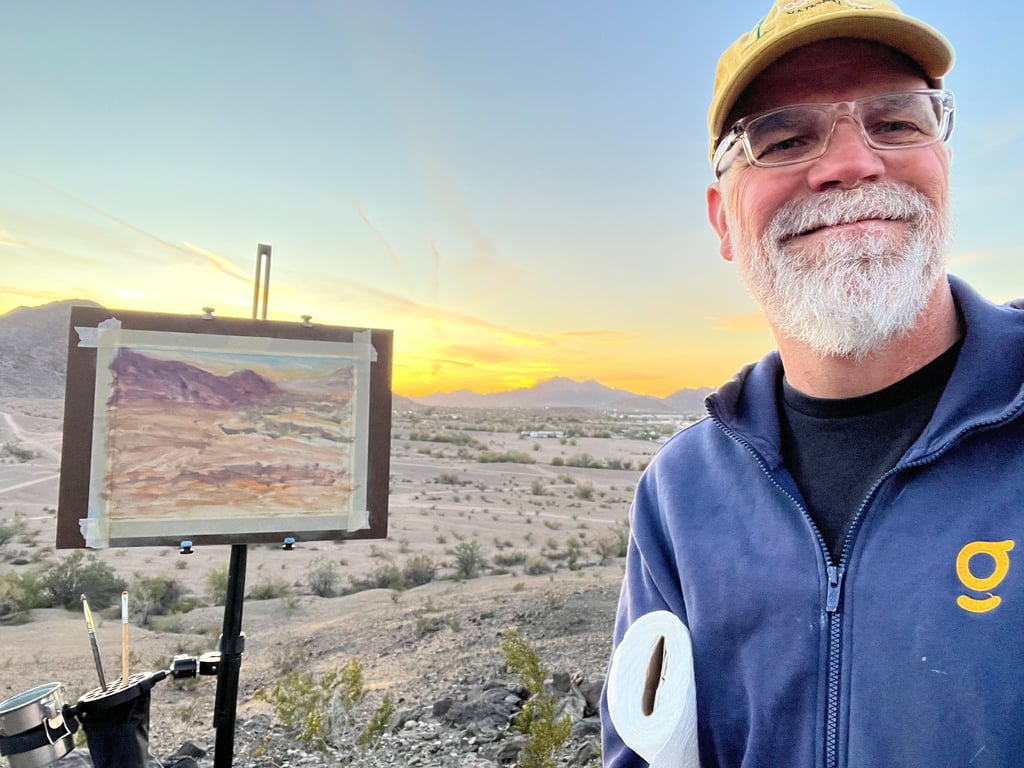
The Human Edge: Gary McCaslin and the Cognitive Arts Resistance
In a world increasingly polished by algorithms, a new movement is reclaiming the "messy" truth of human creativity. At the helm is Gary McCaslin, the author and artist behind the Cognitive Arts Resistance (CAR).
With over 20 years of experience as a Director of Automation and operations leadership, McCaslin brings a unique industrial perspective to his practice as a plein air painter. His work defines what he calls the "Human Edge"—the irreplaceable value of human presence in an automated age.
The Philosophy of the Artifact
McCaslin’s core argument is that we are losing "Decision Data" when we prioritize polished, AI-generated, or studio-perfected art. He champions the Artifact—the raw, high-energy field study—as a superior record of human intelligence.
The Artifact as Data: A raw field study isn’t "messy"; it is high-density data. It contains every split-second decision an artist made while battling wind and changing light. To "fix" or "clean up" a piece is to erase the very data that makes it human.
Refusal of Automation: McCaslin views the Artifact as physical proof of a mind grappling with real-world friction. This struggle cannot be replicated by the "infinite, disposable color" of AI.
Peak Human Performance: Buying an Artifact is a strategic move. It’s not just decoration; it’s owning a record of an artist being truly present.
McCaslin often contrasts the "polished studio piece" (which he calls a "lie") with the "high-context struggle" of the field study. In his view, the energy of the struggle is where the true value lies.
708.973.2577
info@cognitiveartsresistance.com

Cognitive Arts Resistance
The World is Automating. Are You Training?
SYSTEM ALERT: THE 26-YEAR DEFICIT IS EXPANDING. SECURE THE FOUNDER’S FIELD NOTES FOR OPERATIONAL BRIEFINGS AND HIGH-FIDELITY DRILLS. NEURAL HARDENING IS MANDATORY. JOIN THE RESISTANCE.
Data Integrity Protocol